Sunday, March 13, 2011

Website Review: Peakery.com


I came across Peakery.com a couple of days ago, and have spent plenty of time on it already. Apparently it is a newer site, but has a huge database of information. Want to research a peak for a future hike? It's there. Want to "claim" a peak after having conquered it? Upload a photo, and add it to your list of completed hikes. Want to see a list of "baggers" who have climbed peaks in your area? A long directory is there for your use. All of these features are made possible by a user friendly website that is very cut and dry, and FREE! I have found websites like this before, but they required you to pay a yearly subscription in order to get "full" access.

After "claiming" the very few peaks I have "bagged," I realized that my list is quite small and pathetic. Mind you, this site is only for peaks, not for long trails or other achievements.  Due to the fact that it is focused on peaks alone, it makes it possible to get all the information you could possibly want about a peak. In addition, after you upload a photo of a peak, it is available for everyone else to see. To top it off, your homepage shows the last time you bagged a peak (a friendly reminder to motivate you to get out more), and shows a photo of the last peak you bagged on your home page (this will either be a photo you took, or a stock photo).

As you can see, I have very few peaks that I have bagged. I can't decide which is more embarrassing, the lack
of Peaks, or how many days it's been since the last one I summited...
This is a very cool, yet simple website. After seeing all the peaks some individuals have bagged (140 for one guy), it motivated me to want to go for more peaks - even though summit climbing is not my number one interest when it comes to backpacking.

Sunday, February 27, 2011

Trip Report: Tetons - Paintbrush Divide & Cascade Canyon Loop

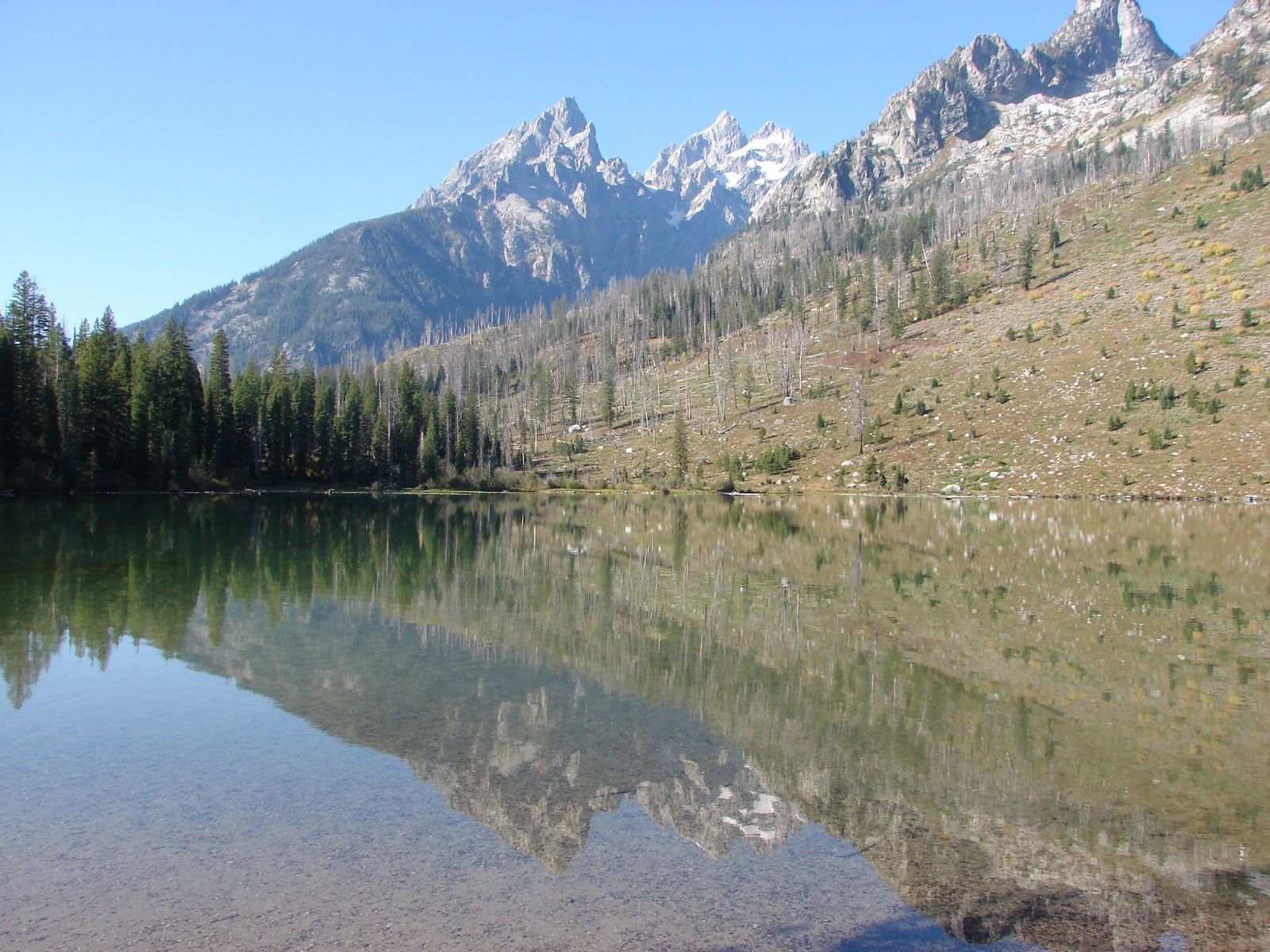
Sunset from our campsite situated in front of the cathedral group
Over a year ago I went on the best hike of my life to-date. What, you may ask, actually defines a hike as being "the best"? Pristine scenery, prime weather, great company, and the list goes on and on. In saying this, I must admit that anything I try to explain in this post will fall short of doing justice - hopefully the photos will help though.

Two years before planning this trip, I slowly began saving up for my backpacking equipment. About a year before, I started donating plasma once or twice a week for the sole purpose of purchasing everything I would need for such backpacking trips. Once I saw this suggested hike in Backpacker Magazine, I wanted it to be the first hike to test out all of my equipment, and to finally start my backpacking adventures.

Holly Lake - where we stopped for lunch, and had a failed fly-fishing attempt 
My friend Geoff and I planned the trip a couple of months in advance, and felt that the month of September would be much cooler than July, but we were a little worried that we would be hit by an intense early winter storm - which are known to hit the Tetons as early as the end of August, or first part of September. Geoff and I slept at his place in Rexburgh, ID the night before, and then had an early start the next morning.
Second photo taken during the trip - LOVE when the scenery makes
every photo look as though it has been edited
By the time we hit the trailhead it was already 9:00 in the morning; not too early of a start when faced with a 12 mile hike which included a nearly 4,000 foot climb in elevation. Backcountry hiking in the Tetons means you are obligated to pay for a backcountry permit, and to leave a deposit on a bear canister (yep, for blacks, and even potential grizzlies:) Although the parking lot had plenty of cars, we didn't see anyone until we hit the trail. From the time we left our car at the trailhead to the time we returned we probably came across 50+ hikers.

The hike on the first day was brutal. This was the first time that I had ever carried 40+ pounds of equipment on my back, let alone the first time I did so while hiking up the side of a mountain. Although I fared well the first half of the day, taking a break for lunch (and a poor attempt at fly fishing) was just enough for my body to decide that it didn't like the heat, didn't like the extra load, and didn't like the gain in elevation. I didn't realize it at the time, but looking back on it, I can see that my labored breathing, mild headache, and extreme fatigue = heat exhaustion. This came at the worst possible time (as if there is ever a good time for heat exhaustion), as we had just begun the final push to the divide and crossed through snow and climbed up a slippery field of shale rock.

Looking into the valley where we camped
Once over the divide, it was all downhill. I filled our water supply from a small spring at 10,700 feet, and although I didn't need to, I used this opportunity to try out my new MSR filter. Pretty sure I've never tasted anything so good. The satisfaction of finally completing an intense climb to the divide only made the freezing water that much more divine. From the divide down to our campsite we had an amazing view of the cathedral group.

The best part of this trip was, by far, the fact that our campsite had a perfect view of the cathedral group that makes up the breathtaking skyline so many are familiar with. We were all alone at our campsite, which only added that much more to this amazing experience. Arriving just before a magnificent sunset almost felt as though the Tetons were welcoming us after a long, strenuous climb.


The hike back to our car the next morning felt like it took no time at all. It is natural to want to hike twice as fast as you normally would since you have gravity on your side. Since this hike, I have read that hiking downhill is twice as hard on your body, and you actually cause more strain on your muscles and joints. For these reasons, you should stop just as often as you normally would when going uphill. My body definitely felt the consequences of hiking downhill so fast once we made it back to the car.

Saying farewell to the Tetons
In closing, I have to say that it is hard to imagine experiencing another backpacking trip quite as impressionable as this trip was. Geoff and I have said repeatedly that this trip has spoiled us. It will be very difficult to experience something as magnificent as this trip was.

Up Paintbrush, camped at Solitude Lake,  and then down Cascade


One of my favorite parts of this trip occurred when driving back home to Provo. I called one of my best friends to tell him about the amazing time I had, and told him that I would love to come do it again when he would be able to join me. Assuming that he would see that being my willingness to drive such a long distance again for this same exact trip would be an indicator of how great the trip really was, he instead said, "it sounds like a long way to drive just for a hike...". This took me back for a second, but I laughed it off, and promptly sent a text to Geoff, relaying the message. I realized after this conversation that backpacking is not for your regular day-hiker, and that it really does take a higher level of commitment to plan such a trip, carry it out, and actually enjoy it. I was reminded once again how lucky I am to have a friend who shares my desire and passion to be in the outdoors.

Best trip EVER!!!!


Monday, February 14, 2011

Out of the Wild: The Alaska Experiment


My brother in-law told me about some show that it was "right up (my) alley" a couple of weeks ago, so I figured I would take his word for it and check it out. I'm glad I did! I ended up finishing the complete (and only) season of Out of the Wild: The Alaska Experiment within a week.

Out of the Wild starts with 9 random individuals from various walks of life - all intent on surviving the Alaskan wilderness for 30 days or more, and on nothing but what they can find along the way for food. The purpose of the "experiment" is to see how many can make it through without pinging their SPOT locator beacon. If someone gives up, than he or she simply hits the button, and a helicopter picks him or her up. After that, it's to civilization, easy meals, and the warmth and comfort of being home.

During the very first episode you learn that the group went through basic survival training before starting the trip, but they don't specify what that training really consisted of. You do find out that they learned how to make Yukon packs, but it's apparent that they didn't learn about how to be selective when choosing what to carry and what to leave behind. Before starting the first leg of their trip, they are given a bunch of supplies to go through for their various needs while on the trail. They foolishly decide to bring everything "just in case" (interesting that this folly was never mentioned by the narrator or any of the participants) they end up needing it. I mean they even brought a thirty pound cast-iron dutch oven!!! May not be the smartest bunch of people, but still entertaining nonetheless.


The group is given maps to find each destination to hike towards throughout their trip, and each destination has a different form of shelter for them to stay in. Sometimes it is a decent cabin with additional supplies and a stove, and other times it is little more than a little rock wall they tie their tarps to in order to keep the wind and rain out. Sometimes their spirits are lifted as they see that they have a decent bed to sleep in, and other times it is too much for one or two of them to handle, and they end up pinging their beacons.

There were several intriguing parts of this show, but I'll only name a few for the sake of not having to write a complete novel:

  • During the very first episode the group foolishly decides to take a "short-cut" by hiking over a high hill-top instead of following the trail found on the map, and which suggests walking through the valley. 50+ pounds in each Yukon pack + several out-of-shape individuals = a nice start to the series.
  • It was interesting to me to see the lack of know-how that the members of this group had. I thought that it would be interesting to throw a seasoned backpacker in the group to help them survive, but realized that the producers probably thought this would make things too simple.
  • The main focus on the show is really how difficult it is for the group to find enough to eat, but it does get annoying when the narrator repeats dozens of times how many calories they have been able to digest by eating squirrels and birds, yet they each need thousands of calories more than what they have found. Personally, I think the show would have been more entertaining if the group had started on their trek at least a month earlier than they did instead of waiting until the very end of Fall - at which point everything starts to die, and wildlife seems to vanish.
  • It seemed that the cameras were quite selective with what they did and did not show. Not once did you see what the group was forced to go through each time they had to use the bathroom - they never even MENTIONED having to go to the bathroom during the 30+ days they are in the wilderness! Going to the bathroom would have been an especially big deal for the girls as two in particular didn't seem to be very comfortable in the outdoors. The cameras also failed to show how difficult it was to collect water and to purify it. I seriously wondered if the producers of the show provided the water in order to keep anyone from dying...
  • Whatever survival training they received seemed to be very limited. They were able to spot berries from a mile away, yet passed over all sorts of insects, worms, and several other plants they could have eaten. In reality, they were so focused on meat for protein that they didn't think about the lack of vitamins they had. Survival 101 - meat is not enough when trying to survive for a long length of time. Without eating the proper vitamins and minerals, your energy will never be replenished,
For the most part, I really enjoyed this show, but I can see why there has only been one season. Without enough success (such as finally killing big game in order to eat well), the audience loses interest. It's interesting to see the group suffer after repeated failed attempts to catch fish, snare small game, and find large game, but this sad story can only loop so many times before the viewer becomes frustrated. I was impressed that the individuals of the group got along as well as they did, but it would have been nice to see someone who was really educated to take control and be a hero in this impossible situation. By the end of the series you get the sense that the group is only trying to hike out of the situation, and have forgotten about trying to survive - not to mention enjoying themselves. I was surprised how many times they chose to collect wood or play house instead of searching for food. Instead, they give one or two the responsibility to find food while the rest do other random things.


One of the most profound moments that stuck out to me in this series actually occurred during the second episode. The one guy who has any experience in the outdoors (a fly-fishing guide) becomes annoyed when the group was willing to stop repeatedly when one member continuously stops to catch his breath. I asked myself if I would have done the same thing. If one individual is threatening the whole group's safety by stopping continually, all the while the daylight continues to diminish and the stopping point is still miles away, would I tell the group to leave him behind? Would I pull him to the side and tell him to ping his beacon for the sake of the rest of the group? Or would I, myself, ping my locator beacon and leave the group to fend for itself? Ironically enough, both the experienced outdoorsman AND the slow-poke ping their beacons and get taken out on a helicopter.

I don't think I would recommend this show to anyone who doesn't find enjoyment in watching a group of average-Joes struggling to navigate and survive in the wilderness. I personally enjoyed everything about the show, but can understand why it didn't make it past the first season.


Saturday, January 29, 2011

Trip Report: Maple Canyon (near Moroni, UT)

View from our campsite
About four months ago my good friend Geoff Brown started e-mailing me to see if I would be able to get away from my grad program for long enough to do a winter trip. At the time it seemed impossible, but we began brainstorming anyway. As I was preoccupied with much more than my brain could already handle, I let Geoff look for places he would be interested in visiting, and he found Maple Canyon. Although very busy during the Summer months, we felt that it would be far enough away from civilization to thoroughly enjoy ourselves. Maple Canyon is known for its limitless rock climbing pitches, but we soon discovered that ice climbing is quite popular there as well. The climbers we passed were pretty impressed that we were camping up there for some reason...kind of made Geoff and I chuckle to ourselves.


We didn't know while planning whether we would be able to drive all the way up to our campsite, or if we would need to hike in. We knew that it was only a mile in though, and felt that we could carry anything we would need for a comfortable winter outing. I wanted to bring dry wood to get the most from the experience, and Geoff was smart enough to realize that if we did need to carry any wood further than 100 yards, than we would need sleds to pull it.

When we arrived we discovered that the road at the mouth of the canyon does not get plowed during the winter months. We strapped on our snowshoes (for the first time, finally), put our backpacks on, and began dragging one sled full of wood, along with a large rubbermade tote also full of wood. I was surprised how good I felt for the first hundred yards, but soon discovered that it would take FOREVER to walk the "short" mile to the campsites. We chose to abandon the wood so that we could get to the campsites before dark, and then walk back down to pull the wood by itself for a second trip. Although we were able to get to the top of the canyon without having to stop every hundred feet to adjust the wood load, the second trip was just as long and tiring as the first couple hundred yards when we were weighed down with our packs.

View of the start of Maple Canyon
Below is a picture of Geoff working his way up the canyon. He was, and usually is, much faster than I am, but he even had to stop pretty often to catch his breath. In hindsight we both saw how unrealistic it was to carry in so much wood, but we both felt that it was worth it that night when cooking our brauts, and the next morning while waiting for the sun to peak over the canyon walls. When we got back to the truck after our trip, we realized that we didn't even take all of the wood! Guess it's better to take more wood than you need??? No idea why I thought we would need so much. Truth is, we didn't have to have a fire, but just wanted to enjoy the luxury of one in the wintertime.

I intended to try a few ideas I saw on Backpacker Magazine's weekly e-mail since we were planning on having a fire. The first recipe (video posted at the bottom) was simple enough, after you dig the fruit out from an orange, fill the remaining peel with cake batter, place the top back on, wrap it in aluminum foil, and let it roast on the coals. The second recipe (if you want to even call it that) suggested roasting apples over a fire, stripping off the peel, and then rolling the warm juicy apple in a mixture of sugar and cinnamon. The second idea was awesome! It was so easy to do, and was worth the little effort it took. Unfortunately, I couldn't do the first recipe because I forgot the aluminum foil at home - which reminded me to put out all of my food next time so that I can make sure I have everything I need.

Snowshoes+backpacks+heavy loads of wood = much too heavy
The weather was perfect, and the two feet of snow consisted of the driest powder I have ever seen. It had the consistency of sand, but was much lighter. Although the road up the canyon was packed from snowmobiles, we were glad to have crampons on the bottoms of our feet for traction. This was the first time I have ever tested out my snowshoes, and was very impressed with how simple, yet effective, they were.
Frost hanging over the stream where we collected water
I don't know what it was about this trip, but I felt a renewed sense of appreciation and love for getting outside and enjoying all that nature has to offer. I have realized that the more trips I go on, the more effective my planning becomes, and the more enjoyable each trip turns out to be. I also realized, once again, that having the right companion on a trip such as this makes all the difference. It's not just anyone who would want to go camping during the winter months - not to mention snowshoeing in while carrying/pulling 50+ lbs of equipment and wood. Check out Geoff's blog, Out and Back Again, to read his review of the trip.


Friday, January 14, 2011

Movie Review - 127 Hours

I am anxious to write my trip report for the great outing I had last weekend, but can't get this movie out of my mind. I didn't feel a need to see this movie, feeling that I could imagine how the events surrounding the incredible story took place, but am VERY glad that I did.


The movie starts out showing Aron Ralston (played by James Franco) quickly gathering together his equipment for a trip to the Canyonlands National Park. The cinematography was one of the more impressing components that made this film a hit (in my opinion) - which is apparent as the camera focuses on Aron's swiss army knife that happens to be casually sitting on the top shelf of his locker, yet is just out of his grasp as he sloppily gathers his things together. The camera gives the viewer a unique perspective throughout the movie, such as when Aron drops his cheap multi-tool, or when Aron's thirst drives his thoughts to retrace his steps all the way back to his truck to the Gateraid bottle that he left in the bed of his truck. It is safe to assume that the scenery of the Canyonlands speaks for itself, and was not a challenge for the cinematographer.


As most of those watching the film are already aware of Aron's story, I knew that it would be a challenge for the director to give a fresh take on the story - not to mention the challenge to actually surprise the audience when the pinnacle moment of the story actually takes place. I felt that the director did an excellent job in giving the audience a fresh view of this well-known story.


Although I have tried putting myself in Aron's situation, watching this movie gave me an increased amount of respect for the seriousness of his predicament. I have asked myself why he didn't cut his arm off much sooner than he did (instead of waiting until he was more than 5 days into the ordeal), and have also wondered why he would be dumb enough to not let anyone know where he was going, or when to expect him back. Both of these questions are addressed in the film, and left me feeling like less of a know-it-all. It actually awakened me to a realization that I may be more vulnerable to poor decision making and carelessness than I would care to admit - one of the several lessons learned from this movie.

I don't want to spoil any surprises for anyone, so I have restrained myself from going into greater details. However, I will take the liberty in dashing anyone's hopes that the emerald pool seen in the trailer actually exists. I was listening to an interview on NPR with a canyoneer who frequently visits the Canyonlands, and he said that the only pools to be found in the area are usually silty and tend to have dead animals in them.

On a seperate occation, NPR interviewed Aron Rolston. A caller asked him what it was that got him through the ordeal; whether it was God or something that kept him from giving up. Aron said something which hits home a lot more than it would have even a year ago for me, he said that he wasn't afraid of dying, but how his death would impact his family. It wasn't the thought of being gone, but the pain it would cause those he loved.

I would recommend this movie to just about anyone. James Franco is an amazing actor, and really gave a realistic interpretation of what occured to Aron. There are some gorry parts (of course), and several F-words; for these reasons the movie has the rating that was given. I didn't have a desire to read the book before seeing the movie, but now want to. If you haven't heard about this story than look it up here. I never cease to be amazed by what the human body is able to endure as long as the mind stays clear and active.

Bottom line: Be sure to always tell someone where you are going, and when you will either call to check in or when you will actually be back. Sorry to all of those who would have been quick to ping their SPOT beacons, Aron was in a slot canyon, small chance of getting a clear shot of a satellite in there...

Here is the trailer for those of you who haven't seen it:

Monday, January 3, 2011

To Ping Or Not To Ping???


I started writing a trip report about my first real backpacking trip which occurred in the Tetons two years ago, but saw this article today and had to share it.

A couple of months ago I wrote about those who misuse their locating beacons after assuming that they were lost. A couple months before that I wrote about the cranial malfunctions which occur when your average Joe walks into an REI, purchases a SPOT locator beacon, and assumes that he can rely on others to save him when he ignorantly places himself in an otherwise avoidable situation.

The author of the Two Heel Drive blog wrote about "The right time to ping your beacon," and gave some great tips. He gives five questions to ask yourself when in a sticky situation before pinging your beacon in order to call in the Calvary.

  1. Does anyone need immediate medical attention? As in, are you or your buddy at risk of bleeding to death? Did you break your leg or hip and are hiking alone? Common sense is the best rule of thumb, but the truth is that if you are freaking out, even in a small degree, your judgement may be jeopardized. Asking this simple question may, by itself, help you get your mind back.
  2. How long could you survive with the gear you are carrying? No sense in calling for help when you have enough gear to sleep though the storm. Remember, gear, not food and water. This blog author reminds us "Three hours without warmth, three days without water, and three weeks without food" before you are really in trouble (this obviously varies depending on the climate you find yourself in).
  3. Are you motivated by an urge to get your money's worth? If you are purchasing a beacon for the peace of mind, good for you. If you are purchasing it with the intent of "getting your money's worth" than forget it. You pay all that money for the device and yearly fees to have the peace of mind that you will have a lifeline in the worst possible scenario, not as a rip cord to pull when you have had enough.
  4. Is it obvious that you are royally screwed?
  5. Have you exhausted every option EXCEPT calling in the Calvary?
The article which inspired these tips came from a story about two men who went missing near Pinecrest, CA (a place I visit every year). They left their car at a ski resort parking lot to go camping, but became lost during a white-out. They became "desperate" and pinged their beacon after convincing themselves that they were lost. Tuolomne County Sherrifs found the two guys 100 feet from the parking lot...

Sunday, December 26, 2010

A Timeout for Kayaking

Hope everyone (both of you who read this) had a great Christmas. I know that I'm excited to try out my dehydrator, and am planning on making my own meals for the trail this Summer. Since I'm enjoying my holiday break, I thought that I would also take a break from the hiking/backpacking topic, and share this amazing video I came across a few weeks ago.

It's amazing what kayakers are able to do. Jumping off a waterfall is suicidal enough, but with a little boat attached to your waist is beyond me. I mean what happens when they hit the water? If I were to just jump in, I would hit the water and sink several feet before swimming back to the top, but if I had a kayak attached to me than it seems like I would hit the water with an abrupt stop (something similar to what happens with this guy when he hits a rock). Apparently this guy is one of a kind - as you will see for yourself.


Found on Backcountry.com